


In Memoriam: Christopher "Sandy" Jencks
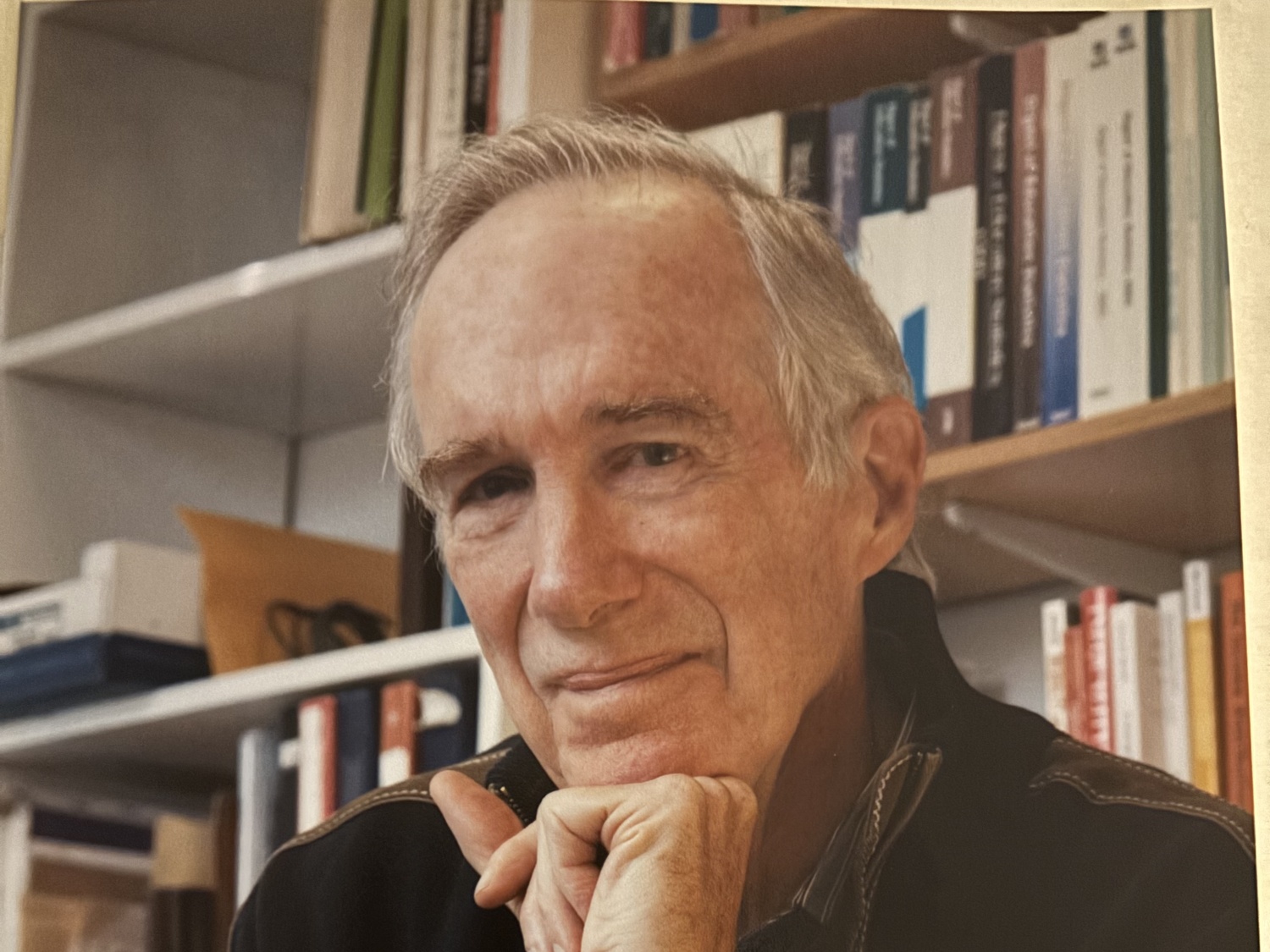
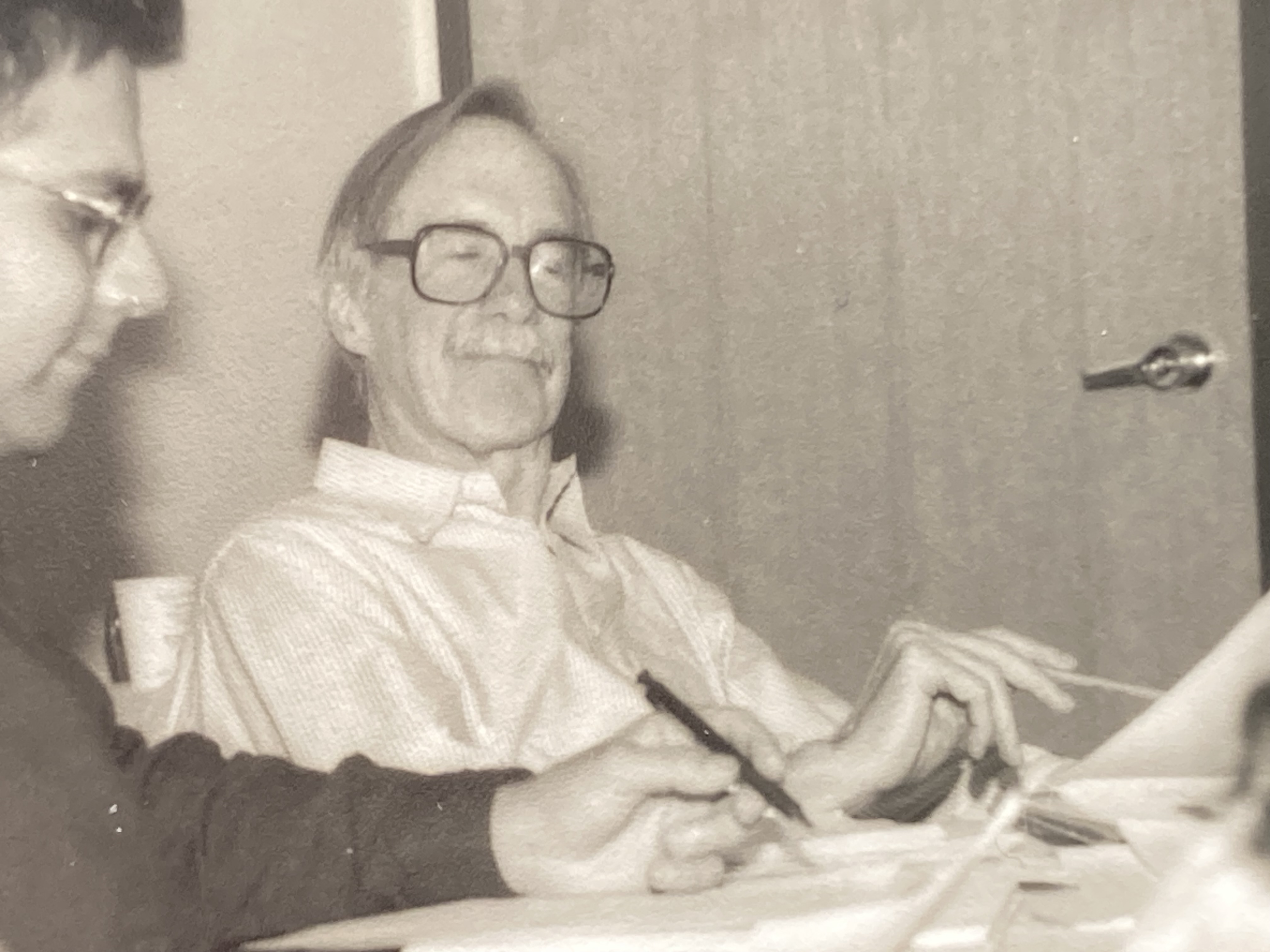
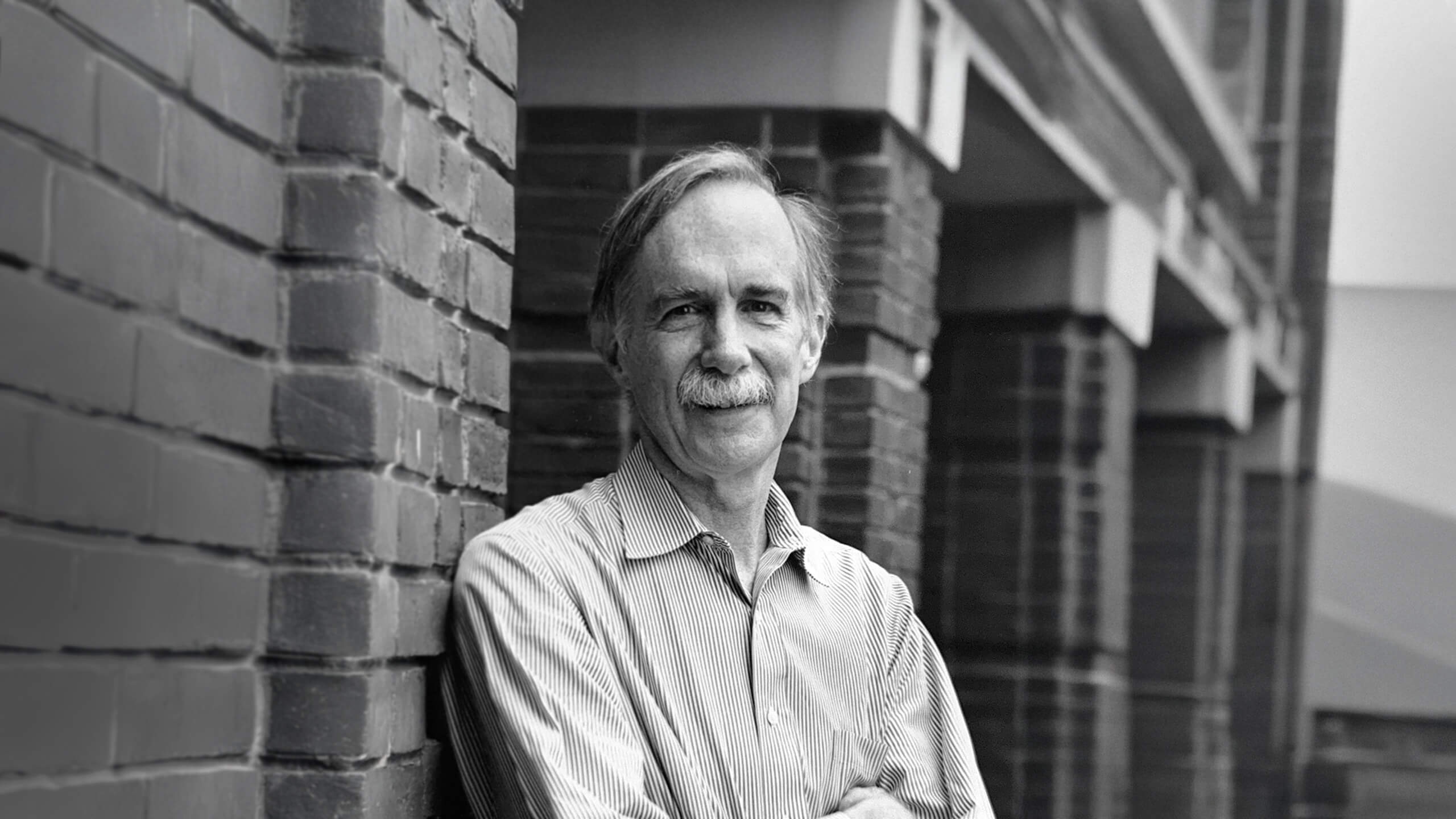
The Stone Program in Wealth Distribution, Inequality, and Social Policy mourns the loss of Christopher “Sandy” Jencks, the Malcolm Wiener Professor of Social Policy, Emeritus. He passed away on Saturday, February 8, 2025.
Sandy Jencks was a monumental figure in our community. He co-founded it in 1998 as the Multidisciplinary Program in Inequality & Social Policy, the precursor to today’s Stone Program. As one of the most influential social scientists of his generation, he profoundly shaped the course of research on inequality, economic mobility, and social policy through his writings and his mentoring of graduate students.
Fusing empirical rigor with elegant prose, his work transcended conventional thinking. He inspired his colleagues and students with his rare mix of incredible intelligence, modesty, and good humor. We are honored to share remembrances from a small handful of the many whose lives Sandy improved: Mary Jo Bane, Deirdre Bloome, David Deming, Kathryn Edin, David Ellwood, Robert Hauser, Jennifer Hochschild, Alex Keyssar, Michèle Lamont, Andrew Leigh, Susan Mayer, Ann Owens, Judith Scott-Clayton, Timothy Smeeding, Laura Tach, Mary Waters, and Bruce Western. Additional toasts and remembrances can be viewed here in videos of a conference held at the Harvard Kennedy School in 2013, titled Inequality Reexamined: A Conference in Honor of Christopher “Sandy” Jencks.
Professor Jencks pushed scholars, policymakers, and the public “to think about social policy more concretely,” as he wrote in his 1992 book Rethinking Social Policy: Race, Poverty, and the Underclass. But concrete thinking did not diminish his attention to the moral stakes of the issues he explored. “Daily contact with the homeless,” he wrote in his 1994 book The Homeless, “also raises troubling and ultimately unanswerable questions about our moral obligations to strangers. At a political level, the spread of homelessness suggests that something has gone fundamentally wrong with America’s economic or social institutions.” His scholarly contributions earned him elections to the American Academy of Arts and Sciences in 1992, the National Academy of Sciences in 1997, and the American Philosophical Society in 2004. Additionally, he was a dedicated contributor to public life. He wrote for The New York Review of Books for over 50 years, almost since its founding; these collected writings are available here. He also wrote frequently for the public in the pages of The American Prospect; those collected writings can be found here. He appeared in its inaugural issue in 1990 and served on its founding editorial board. A remembrance of Sandy in The American Prospect is available here. Remembrances also have been shared by The New York Times, the Harvard Kennedy School, and The Crimson.
He is survived by his beloved family, wife Jane “Jenny” Mansbridge, the Charles F. Adams Professor of Political Leadership and Democratic Values, Emerita, at the Harvard Kennedy School, son Nat Jencks, and grandson Wilder. A memorial service will be scheduled for the spring.
Below, we share a series of tributes from colleagues and students of Christopher “Sandy” Jencks:
Mary Jo Bane
I worked with Sandy for many years, starting in the late 1960s, and learned an enormous amount from him. He cared deeply about facts and evidence and clear writing. And he also cared deeply about the people he was writing about: disadvantaged students, those experiencing homelessness, those mired in poverty. He recognized earlier than most that inequality was a scourge on the country and needed to be addressed.
The world is a better place for his contributions. He will be deeply missed.
Mary Jo Bane is the Thornton Bradshaw Professor of Public Policy and Management, Emerita at Harvard Kennedy School.
Deirdre Bloome
Sandy was a true giant in the field of inequality and social policy. He reoriented our thinking about the most pressing problems of our times by asking important questions, answering them with the utmost empirical rigor, and communicating the answers through engaging prose.
Sandy's devotion to ferreting out the truth, whatever it might be, inspired generations of scholars across disciplines. He offered generous mentorship, which combined high standards with real care and humor. Sandy was a giant, but he also carried himself with a rare humility. He was simply a wonderful human being.
On a personal note, Sandy and I spent many hours discussing the role of luck in inequality, and I feel extremely lucky to have known him. I share many memories with scores of Sandy's students, including wonderful coffees and meals that ranged from intense deliberations to simple laughs, as well as treasured celebratory emails with crazy colors and capitalizations, not to mention his penetrating theoretical, empirical, and editorial insights. Before I decided to apply to graduate school, I wandered the stacks of my local library and saw the spine for Sandy's book INEQUALITY staring down at me in capital letters. I picked it up, and it helped push me to embark on a journey toward a Ph.D., a journey that Sandy himself helped me finish. Truly, what luck. He will be deeply missed.
Deirdre Bloome is the Peter and Isabel Malkin Professor of Public Policy and Professor of Sociology at Harvard University, and Director of the Stone Program in Wealth Distribution, Inequality, and Social Policy.
David Deming
Sandy was a towering giant in the study of inequality and social policy. No one I know was more skilled at extracting the most trenchant and important insights from a book or a research paper.
Sandy deserved every bit of his legendary reputation. He was a dedicated mentor to me and to so many others, and I am deeply grateful for our time together.
David Deming is the Isabelle and Scott Black Professor of Political Economy at Harvard Kennedy School.
Kathryn Edin
I can’t even capture how important it was that I met Sandy at the age of 24. From that point on, everything changed for me. He kept editing my papers for years (the last when I was 57)!
Over the decades I knew him, Sandy was easily the most significant person in my life trajectory besides my spouse and parents. For me, the magic was his high expectations (and I do mean high) melded with a deep, fundamental kindness.
As just one example of that kindness, once, I called him in tears over some professional crisis. A half a year later, I was at Harvard, first as a visitor, and then as a tenured professor.
Kathryn Edin is the William Church Osborn Professor of Sociology and Public Affairs at Princeton University.
David Ellwood
Christopher Jencks was the titanic figure among several generations of social policy scholars. From his pathbreaking and often controversial books from Inequality (written along with our colleague Mary Jo Bane and many others) and The Homeless to his myriad essays, articles and chapters, Sandy taught nearly all of us in the field how to think systematically and critically using the best available evidence and to constantly learn and change as new insights emerged. He was deeply committed to social justice.
His essential lesson was that the best way to help was to search for and tell the truth regardless of how appealing or uncomfortable the conclusion. Sandy was a master mentor and collaborator—nearly all his works were coauthored with others. He was warm and generous and attentive, a superb writer and editor.
At HKS, he was instrumental in building the Malcolm Wiener Center for Social Policy and in the creation of the Harvard Multidisciplinary Program on Inequality and Social Policy Program. These have helped train over 250 PhD students who have become many of the leaders in the field.
I learned more from Sandy than anyone else in academia, and he was one of the best people I have ever known. I am certain that hundreds of others would say the same thing.
David Ellwood is the Isabelle and Scott Black Professor of Political Economy, Emeritus at Harvard Kennedy School, where he served as Dean from 2004 to 2015. He was a co-founder of the Multidisciplinary Program in Inequality & Social Policy with Christopher Jencks, Katherine Newman, and William Julius Wilson.
Robert Hauser
While I was in college, my Mom directed me to Sandy's writing in The New Republic. He was inspiring then, and it was a privilege to know Sandy's work, colleagueship, and friendship throughout my career in sociology.
Robert M. Hauser is the Vilas Research Professor and Samuel Stouffer Professor of Sociology, Emeritus, at the University of Wisconsin-Madison and the Executive Officer of the American Philosophical Society.
Jennifer Hochschild
Sandy Jencks was an incomparable colleague, scholar, teacher, and friend. As so many others have pointed out, he combined brilliance with intellectual integrity – he used to remind all of us that it is crucial to specify just what question we wanted to answer, and equally crucial to enable the evidence to lead to the best answer even if we didn’t like it.
He combined encouragement to “reach for the gold ring on the merry-go-round,” as he put it, with creating some balance in one’s life; he once announced that he would not have lunch with me again until I had reneged on at least two important but unnecessary commitments.
I miss him very much, and was honored to count myself a friend.
Jennifer Hochschild is the Henry LaBarre Jayne Professor of Government, Professor of African and African American Studies, and Professor of Public Policy at Harvard University.
Alex Keyssar
Although I had read Sandy’s work for years, I met him only when I came to HKS in 2001; and it was my good fortune that we were office neighbors for many years. Sandy’s talents and influence as a teacher are, of course, well known and justly celebrated, but perhaps less visible to the outside world were his virtues as a colleague.
He was inclusive, smart, and warm; he did his homework on every issue; he traversed disciplinary lines with ease, insight, and authority; and his mockery of neckties added a twist of humor to many occasions.
He was also just a damn good person and a fine friend. I treasure the memory of the many late afternoons when, on his way out, he would poke his head into my office and say “Do you want to get supper?”
Alexander Keyssar is the Matthew W. Stirling Jr. Professor of History and Social Policy at Harvard Kennedy School.
Michèle Lamont
Sandy was a great friend and mentor, a mensch, and a disciplinary giant.
His intellectual curiosity and generosity knew no bound. I am among the many colleagues who have benefitted from his quiet presence and sharp mind, and who feel keenly his absence. His memory will stay with us for years to come.
Michèle Lamont is Professor of Sociology and of African and African American Studies and the Robert I. Goldman Professor of European Studies at Harvard University.
Andrew Leigh
Sandy was an extraordinary scholar, who taught me how to think about disadvantage. I remember when I read Rethinking Social Policy, being startled by the analysis, and the surprising conclusions. It made me realise that there was a way of considering poverty and inequality that was driven by rigorous frameworks and an adherence to data, not to presupposition. Reading The Homeless and then The Black White Test Score Gap gave me the same jolt. Here was someone who wasn’t writing to make you feel comfortable, but to find the truth.
Having Sandy as my thesis supervisor from 2000 to 2004 was a true joy.
He was funny, idiosyncratic and endlessly interesting. I still remember him asking our multidisciplinary inequality seminar after a discussion about Moving to Opportunity “I wonder if it would be cheaper to pay rich people to move into poor neighbourhoods instead?”, and his observation that the early childhood randomised trials of the 1960s continued to get funding because they showed promising early differences.
Later, as my coauthor, I couldn’t believe how many times he would keep coming back to the text, tinkering and tinkering to make it better. It was only at the end, when the paper was finally put to bed, that I read phrases like “there are more theories than available datapoints to test them”, and realised what pizzaz he’d brought to the paper.
Sandy saw things that others didn’t, and he encouraged me to be curious about the world of social policy. Without him, I probably wouldn’t have written Battlers and Billionaires, a book about Australian inequality. And without Sandy, I certainly wouldn’t have delved into tricky issues such as family structure.
Sandy was unique, and wonderful. I felt lucky to have known him and be guided by him as my doctoral chair.
Andrew Leigh, Member of Parliament of Australia, is the Assistant Minister for Competition, Charities, Treasury and Employment, and Federal Member for Fenner in the Australian Capital Territory.
Susan Mayer
Sandy was singular in every sense. He was an excellent writer and editor as others note. He was a provocative and original thinker. He taught and inspired. He had no academic discipline other than brilliance. He had no PhD. Every conversation with Sandy was inspiring.
Once I drove with him from Chicago to an IRP conference in Madison – a bit over 2 hours. Sandy talked the whole two hours. When I got home, I told my husband that Sandy had talked the whole drive. My husband remarked that it must have been exhausting. But it wasn’t - It was exhilarating. I often think of that drive because it was so very “Sandy” – a cornucopia of ideas just spilling out that made you wish an otherwise miserable drive would be three rather than two hours.
I owe my career to Sandy. I was a not-all-that-young mother and at a crossroad in my life, not knowing what to do next. A friend introduced me to Sandy. We had talked for an hour or so when he stopped, looked at me and told me that I needed to come back to school and that he would find a way to help me. I jumped at that suggestion and worked for Sandy throughout my PhD program. He chaired my dissertation committee. We wrote a few articles together. We talked endlessly.
Sandy may have been brilliant, but to me he was a friend, kind, thoughtful, never angry, and never driven by ego. The world seems slightly more empty without him.
Susan E. Mayer is Professor Emeritus at the University of Chicago Harris School of Public Policy, where she served as dean from 2002 to 2009.
Ann Owens
Sandy was brilliant---empirically oriented but saw the big picture. Incisive. Curious. His work shaped research on social policy, education, and inequality, among other fields.
More impressive was his kindness. I was lucky enough to be his student, and he was so gentle and patient. He inspired but never intimidated; he encouraged but never demanded. We talked about big ideas, but he also gave me line-edited printouts of my work. (During the summers, these could come via mail from Wellfleet; I saved several knowing I would want them one day.) As I wrote about Sandy in my dissertation acknowledgments, "If I learned 10% of what Sandy tried to teach me, I will no doubt have a successful career."
When I emailed him good news, I would get "Congratulations!" or "Fabulous news!" back in enormous blue font, even years after I graduated. Sandy shaped the course of my career and my life. I am so grateful to have found my way to him and to have been mentored so kindly and generously. I miss him, and I will try to pay it forward.
Ann Owens is Professor of Sociology and, by courtesy, Public Policy at the University of Southern California.
Judith Scott-Clayton
Sandy's book Rethinking Social Policy was what compelled me to switch my major, into the social sciences, as an undergrad. I couldn’t believe that eventually he would be a key member of my dissertation committee.
I still remember specific comments he scrawled on my drafts, specific conversations we had in his office, witty academic zingers he had that I now share with my own students. And how he could cut through anyone’s technical jargon straight to the point. I feel so lucky to have known and learned from him.
Judith Scott-Clayton is Professor of Economics and Education at Teachers College, Columbia University.
Timothy Smeeding
Sandy was hands down the best writer and editor I ever met. One shining example is the Future of the Family book I was able to do with Lee Rainwater and Pat Moynihan for RSF in 2004. Sandy and David Ellwood wrote the first chapter on what we knew about the growth of single parent families—longish but spot on and a great read. Russell Sage Press would send the papers out for review, except for Sandy and David’s chapter. They never had anyone edit Jencks because it would just get Sandy mad and he would have to change it all back. So what he turned in was what was published. And as others have alluded, he wrote, rewrote and again and again until he got it just right.
We only wrote together once in 1988 on a framework for examining the well-being of children and the elderly (after Sam Preston pointed out the huge differences) and of course his intellectual prowess and writing led the way. In fact, he became one of the four people I listed for a ‘professional reference’ and undoubtedly he opened may doors for me in that way.
Dinner or lunch with Sandy was always an intellectual exercise. He would push probe and always ask the right questions. And he was equally adept at socio-economic measurement issues. He would remark that the sociology profession thought of he and Lee Rainwater as economists in disguise!
When the 40th anniversary of Inequality (Basic Books, 1972) and the 20th anniversary of Rethinking Social Policy (Harvard University Press, 1992) came along, Eric Wanner and RSF gave him a conference on inequality and a celebration of Sandy. The conference was 25 people only, multi-disciplinary to the hilt, on what were the driving forces of inequality, what were the consequences, what did we expect would be the future, and so on. The word retirement was not mentioned because the Harvard Soc. department said it would not let Sandy retire!
Timothy Smeeding is the Lee Rainwater Distinguished Professor Emeritus of Public Affairs and Economics at the Robert M. Lafollette School of Public Affairs, University of Wisconsin–Madison.
Laura Tach
I’ll never forget my first interaction with Sandy. It was spring, during graduate admissions season in the early 2000s, and I saw his name pop up in my inbox. My stomach flipped—the Christopher Jencks had sent me an email!
I opened it with nervous anticipation to find my grad school writing sample, each page marked top to bottom with red-inked edits and scribbled comments. Even before knowing whether I would be admitted, Sandy had taken the time to engage deeply and constructively with my work, something I had never experienced from a professor before. I soon learned that this quality is what made him truly exceptional to all of us.
As an adviser, Sandy was deliberate, unhurried, and driven by truth. He peeled back every layer of a question, considering all angles with quiet intensity and focus. He was always fully present, guiding you and your research with unwavering attention—often over coffee.
Sandy saw something in my work, and in me, that I hadn’t yet seen in myself. He opened the world of academia to me, a world I still feel so blessed to be part of all these years later.
Thank you, Sandy, for being the consummate scholar, mentor, and human being. You will be missed, but your legacy will live on.
Laura Tach is Professor of Public Policy and Sociology at Cornell University.
Mary Waters
Sandy Jencks was a brilliant social scientist as well as a wonderful mentor and advisor. He gave the best feedback on work—questioning assumptions, finding holes in the argument, asking for counter-examples and often channeling the skepticism of the “educated reader” we all want to write for. But he did all of this with a kindness and an intense care that always conveyed that he wanted nothing more than to help and to support.
He lifted up generations of students and younger scholars, myself included. He was a good friend with a wonderful sense of humor and a warm smile. He also was a very good man who lived his values.
We have lost a giant, and I very much hope we can all be more like Sandy as we pay our debt forward.
Mary C. Waters is the PVK Professor of Arts and Sciences and the John L. Loeb Professor of Sociology at Harvard University.
Bruce Western
Somehow Sandy managed to be gracious and kind, and was also a head on Mount Rushmore at the same time. The Kennedy School and the community of scholars working on poverty and inequality will not be the same.
Bruce Western is the Bryce Professor of Sociology and Social Justice and Director of the Justice Lab at Columbia University.